 Reviews


 Proudly American


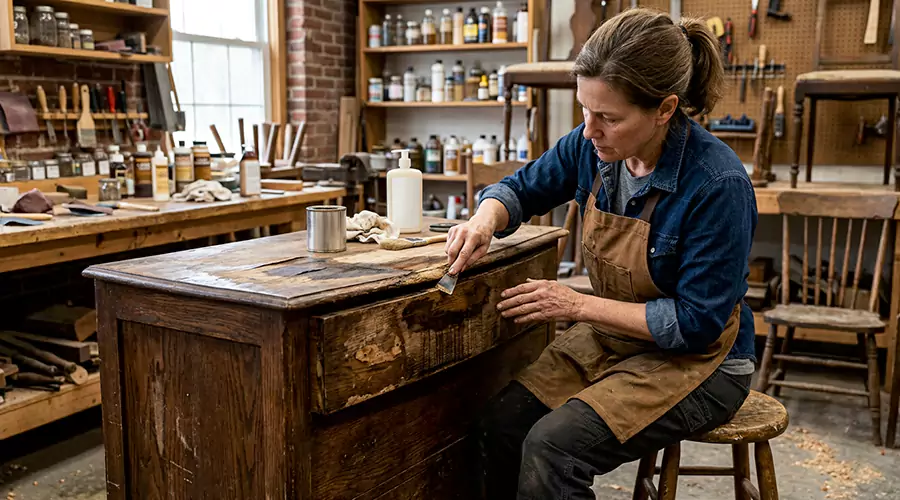
Yes, water-damaged wood furniture can often be restored when the wood remains solid and the damage is limited to staining, raised grain, loose joints, or a failed finish. Similar considerations apply to water damage floor repair, where solid wood flooring may be restored when the damage is limited and the material remains structurally sound. Replacement becomes more likely when prolonged saturation causes severe warping or decay that affects the furniture's structure.
Let the piece dry before deciding how much repair it needs. Wood can change shape as moisture leaves.
What Types of Water Damage Can Furniture Develop?
Furniture can react in several ways because wood absorbs moisture and expands. The finish may cloud while veneer can loosen.
Common signs of furniture water damage include:
- White or cloudy finish marks
- Dark water stains
- Raised wood grain
- Swollen joints
- Loose veneer
- Warped panels
- Peeling finish
- Musty odor
A brief spill is very different from furniture with water damage after a room flood. Longer exposure raises the chance that moisture will reach glue joints.
Which Water-Damaged Furniture Is Usually Worth Restoring?
Furniture is often worth restoring when its frame remains stable and the wood has not softened from decay. Solid wood pieces are generally more forgiving because damaged finishes can be removed and renewed. Veneered furniture may also be repairable when the veneer has not broken apart.
| Condition | Restoration Outlook |
|---|---|
| Light white rings | Often good |
| Surface staining | Often good |
| Raised grain | Usually repairable |
| Small loose veneer areas | Sometimes repairable |
| Mild warping | Depends on drying response |
| Severe swelling | Poorer outlook |
| Soft or decayed wood | Replacement may be better |
What Should You Do First After Furniture Gets Wet?
The first step is to remove the furniture from standing water and let it dry slowly in a controlled area. Wipe off surface water with absorbent cloths. Remove drawers or doors when they can be taken out without force so trapped moisture has a path to escape.
Follow this process:
- Move the piece to a dry area.
- Blot visible water.
- Remove loose contents.
- Open doors or drawers when possible.
- Provide gentle airflow.
- Monitor the piece as it dries.
Avoid placing wet wood directly beside a heater. Rapid uneven drying can increase checking or distortion.
Can Water Stains Be Removed From Wood Furniture?
Many water stains can be improved. White cloudy rings often indicate moisture trapped in the finish while dark stains usually mean water reached deeper. Let the piece dry fully first. Some cloudy marks improve as trapped moisture leaves. Do not begin sanding simply because the surface looks discolored. Sanding through veneer or an original finish can create damage that is much harder to correct.
What Happens When Veneer Gets Wet?
Veneer can lift when moisture weakens the adhesive beneath the thin wood surface. Small bubbles may flatten as the piece dries, but larger loose areas can require careful reattachment. Broken or missing veneer may need a matching patch. Repair water damaged wood furniture only after the area has dried enough to show its stable shape.
When Does Furniture Need Refinishing?
Refinishing becomes useful when the wood remains structurally sound but the finish has turned cloudy or peeled across a large area. The existing coating is removed or prepared before a new finish is applied. Refinishing wood furniture may involve cleaning the dry surface before damaged finish is removed. Small defects can then be repaired before sanding and a compatible finish is applied. Refinishing furniture will not correct active warping or soft wood. Structural repair should come first.
What Warning Signs Mean the Damage Is More Serious?
More serious damage usually appears in the structure. Joints may no longer fit correctly after swelling.
Watch for these signs:
- Legs or rails feel loose.
- Wood remains badly warped after drying.
- Veneer separates across a large area.
- Drawers no longer fit.
- Wood feels soft when pressed.
- A musty odor remains.
- Mold appears on unfinished surfaces.
- Joints open as the piece dries.
- Particleboard sections remain swollen.
What Can You Check Yourself?
A simple stability check can separate finish damage from structural damage. Wait until the piece has dried first.
Set the furniture on a flat floor and gently check:
- Whether all legs sit evenly
- Whether joints move under light pressure
- Whether doors close normally
- Whether drawers slide without force
- Whether panels remain twisted
- Whether the surface still feels damp
Do not force swollen drawers open. Pulling hard can break guides or split surrounding wood.
When Should You Call a Professional?
Professional assessment is appropriate for valuable furniture or pieces with widespread veneer damage. It is also useful when joints have shifted or the original finish may have historic value.
Consider help when:
- The piece is antique.
- Veneer is lifting in several areas.
- Decorative inlays are affected.
- Structural joints have separated.
- Severe warping remains after drying.
- Mold has developed on hidden surfaces.
- The original finish should be preserved.
How Can You Protect Wood Furniture From Future Water Damage?
Prevention focuses on limiting direct moisture contact. Furniture should not sit directly against damp basement walls.
Useful habits include:
- Use coasters on finished surfaces.
- Keep furniture away from recurring leaks.
- Wipe spills immediately.
- Maintain moderate indoor humidity.
- Raise valuable furniture during flood risk.
- Inspect basement storage areas for dampness.
Conclusion
Water-damaged wood furniture can often be restored when the frame remains solid and moisture has not caused severe decay. Let the piece dry before sanding or gluing because its shape can change during moisture loss. Surface stains or failed finishes are often repairable, while widespread swelling creates a harder restoration. If the piece is valuable or structurally unstable, professional evaluation can help prevent irreversible damage.
Frequently Asked Questions
Can swollen wood furniture return to normal?
Mild swelling can improve as solid wood dries. Engineered wood that has expanded badly may remain permanently distorted.
Can white water rings be removed?
Often, yes. Some white marks improve after moisture leaves the finish while others need finish correction.
Should wet furniture be placed in direct sunlight?
Usually not. Strong heat can dry one side too quickly and increase warping or cracking.
Can moldy wood furniture be saved?
Sometimes. The answer depends on how deeply growth has affected the wood and whether the piece can be cleaned safely.
Can warped furniture be sanded flat?
Sanding should wait until moisture has stabilized. Removing material too early can leave an uneven surface after drying.
Is solid wood easier to restore than particleboard?
Usually. Solid wood tolerates drying and refinishing better than particleboard that has swollen after saturation.